


Structured Problem-Solving & Lean Basics: Skills You Can Use at Work, at Uni, and at Home
See how Lean and structured problem-solving can help you improve processes, manage change, and tackle everyday challenges with greater confidence and clarity.
Tobias Kohl
6/13/202616 min read
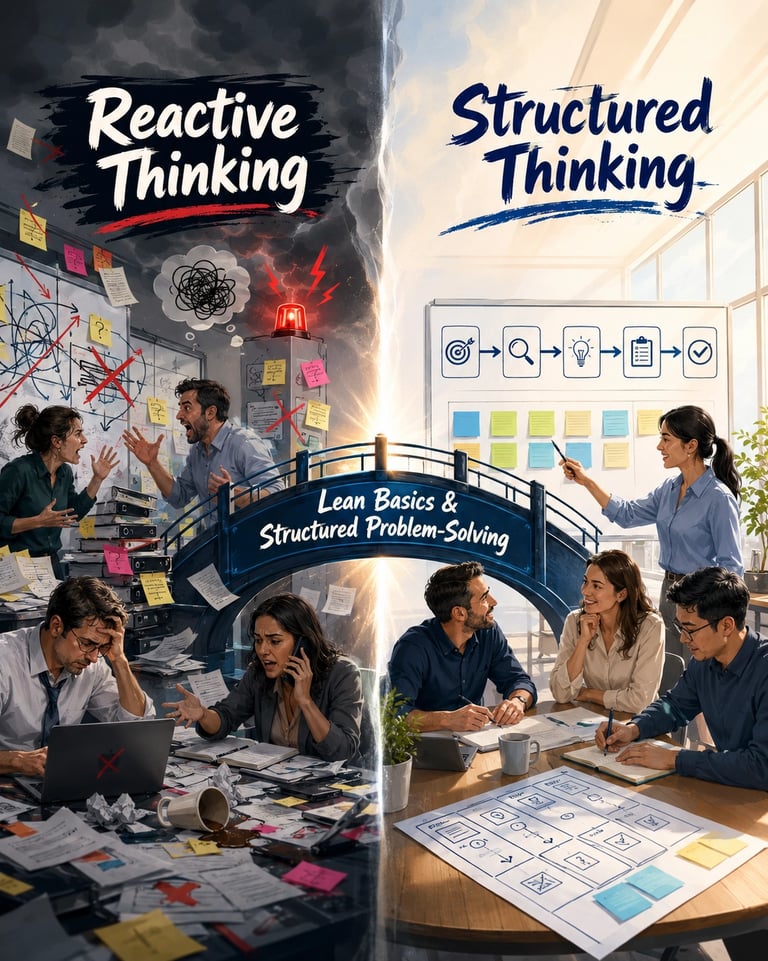
Structured Problem-Solving & Lean Basics: Skills You Can Use at Work, at Uni, and at Home
Explore how the practical skills from the TRANSFORM2BEST Structured Problem-Solving & Lean Basics course can help you in:
Manufacturing
Service organisations
University studies
Everyday life.
Use the table of contents below to jump directly to the area that is most relevant to you and discover real-world examples of how these skills can be applied.
Most people do not wake up thinking, “I need Lean today.”
They wake up thinking, “Why does this keep taking so long?”
Or, “Why are we fixing the same mistake again?”
Or, “Why did that meeting end with no real decision?”
Or, “Why is everyone busy, but the customer still has to wait?”
That is where Lean basics and structured problem-solving become useful.
The TRANSFORM2BEST e-learning course, Structured Problem-Solving & Lean Basics, is built around practical improvement skills. It covers Lean thinking, A3 problem-solving, waste, root cause analysis, stakeholder management, change management, communication, feedback, and better meetings.
That may sound like workplace training. And yes, it is very useful at work.
But the same skills also help in other parts of life. They help students plan assignments. They help families organise routines. They help people make decisions with less stress. They help teams stop blaming each other and start looking at the process.
ADVANTAGES IN MANUFACTURING ORGANISATIONS


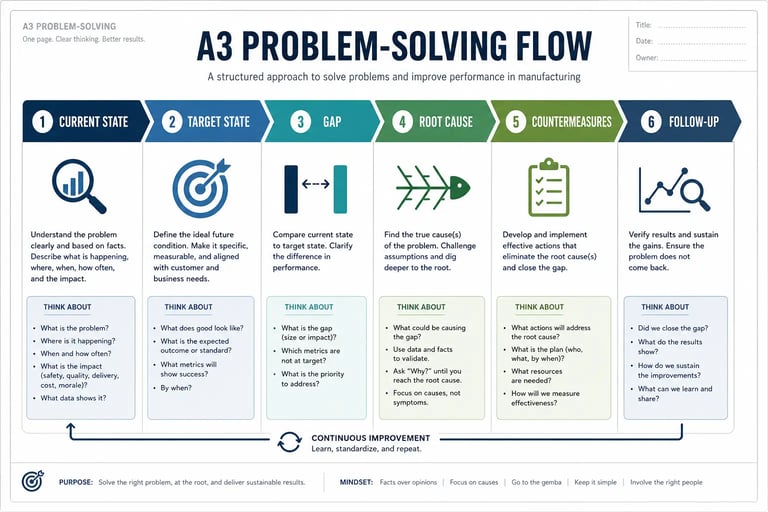
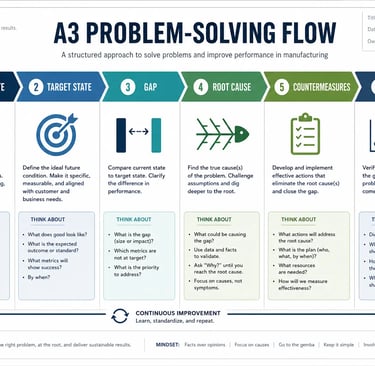
The A3 method gives teams a better way to work through the issue. It puts the problem on one page. It asks the team to define the current state, the target state, the gap, the root cause, the countermeasures, and the follow-up.
That sounds simple. It is. But simple does not mean weak.
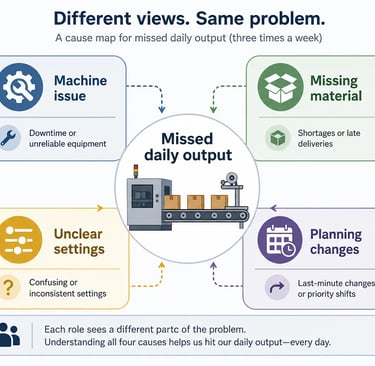
Take a packaging line that misses output three times a week. One person says the machine is unreliable. Another says the operators need more training. Another says the material arrives late. Another says planning keeps changing the schedule.
All of these views may contain part of the truth.
Without structure, the discussion can turn into opinion.
Manufacturing is the place where many people first expect Lean to belong.
That makes sense. In manufacturing, problems are often easy to see.
A machine stops.
A part is missing.
A product is damaged.
A tool is not where it should be.
A changeover takes too long.
A quality check fails.
A delivery is late.
The waste is visible.
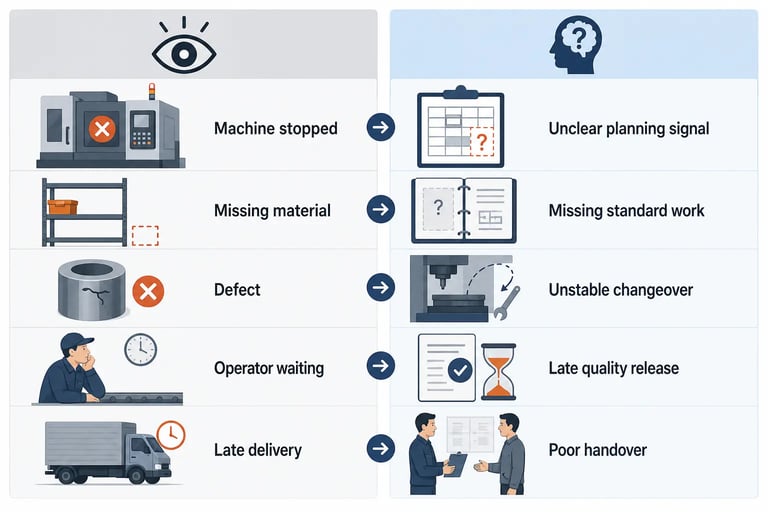
But visible does not always mean understood.
A team may know that one line keeps missing its daily target. They may know that operators spend too much time waiting. They may know that defects appear after changeovers. They may know that the morning shift starts the day by cleaning up problems from the night before.
But knowing that a problem exists is not the same as knowing why it exists.
This is where structured problem-solving helps.
A common reaction in manufacturing is to jump straight to a fix. Add another person. Add another check. Tell people to be more careful. Ask maintenance to look at the machine again. Push the team harder.
Sometimes those actions help for a short time. But if the real cause is still there, the problem comes back.
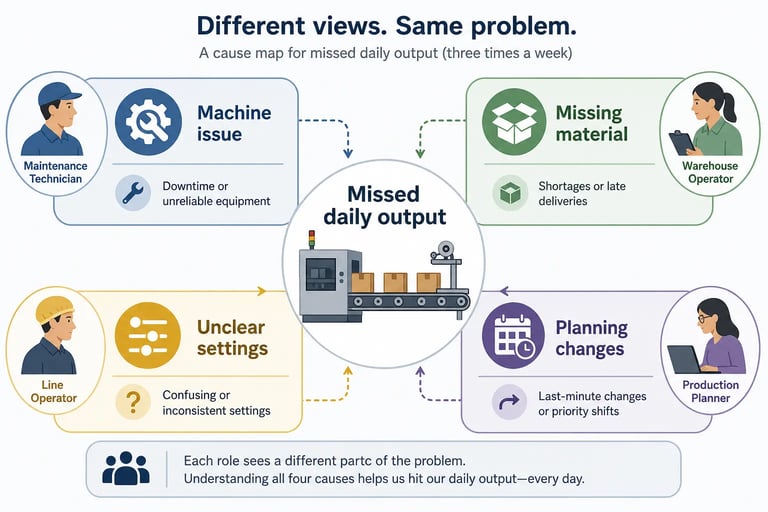
With an A3, the team has to look at facts. When does the delay happen? Which product is running? Which shift is affected? How long is the loss? Is the machine actually down, or is the team waiting for material? Is the standard work clear? Are the settings stable after changeover?
The discussion changes.
Instead of “Who caused this?” the team asks, “What does the process show?”
That is a big shift.
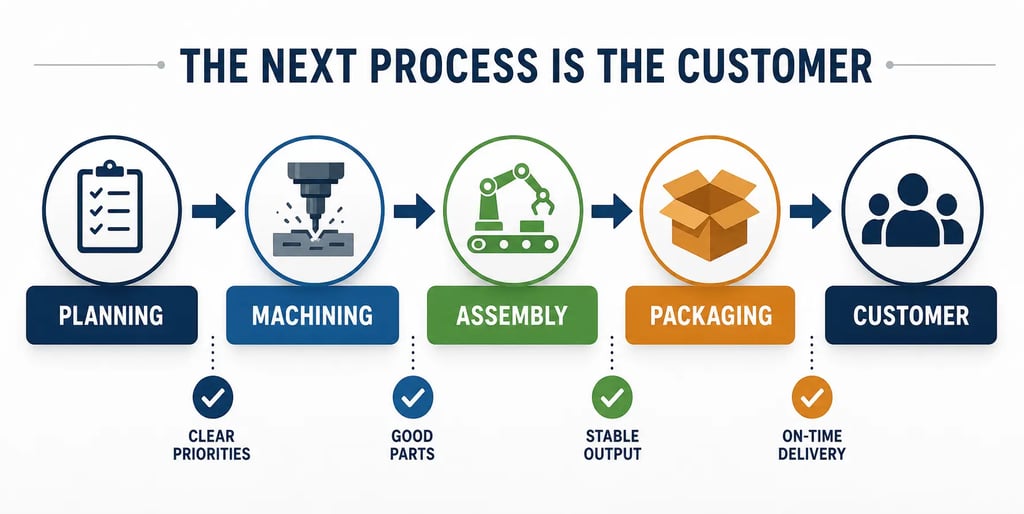
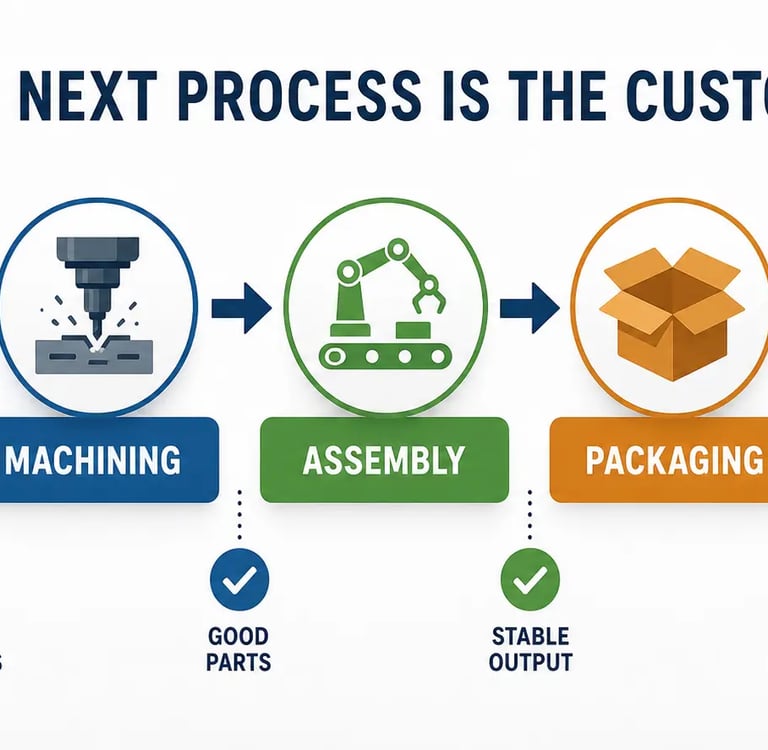
Manufacturing teams also benefit from learning to see the customer more clearly. The customer is not only the person buying the final product. In a factory, the next process is also a customer.
If machining sends late or faulty parts to assembly, assembly is the customer.
If filling sends unstable output to packaging, packaging is the customer.
If planning sends unclear priorities to production, production is the customer.
This way of thinking reduces blame. It also makes the flow easier to discuss.
The TRANSFORM2BEST course includes tools such as SIPOC, customer voice, gap analysis, Ishikawa diagrams, 5-Why, spaghetti diagrams, flow charts, value stream thinking, and TIMWOODS waste analysis. These tools help teams slow down and look properly before they act.
A team may believe the main issue is machine downtime. After mapping the process, they may discover something else. Maybe the line is waiting for quality release. Maybe material is not staged before the shift starts. Maybe operators search for tools during every changeover. Maybe the first-piece check is unclear. Maybe urgent orders keep interrupting the schedule.
The cause is often not one dramatic failure. It is a set of small problems that repeat.
Lean tools help make those small problems visible.
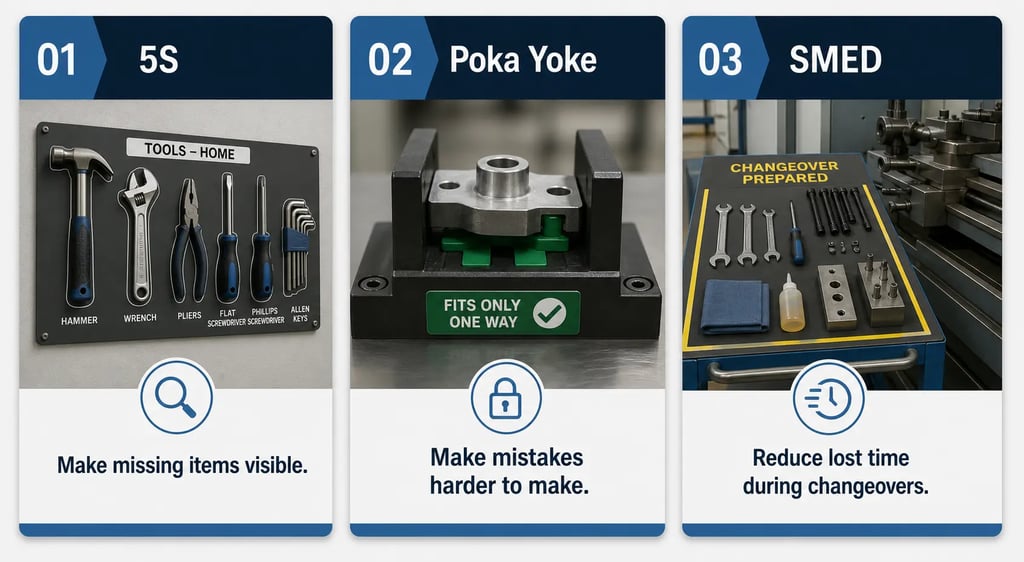
A good example is 5S.
Some people think 5S means cleaning. That is only part of it. A useful 5S system makes work easier and problems easier to spot. If a tool has a clear place and it is missing, the team sees the issue before production starts. If gauges are labelled and stored properly, operators do not waste time searching. If the right parts are marked and separated, the chance of using the wrong item goes down.
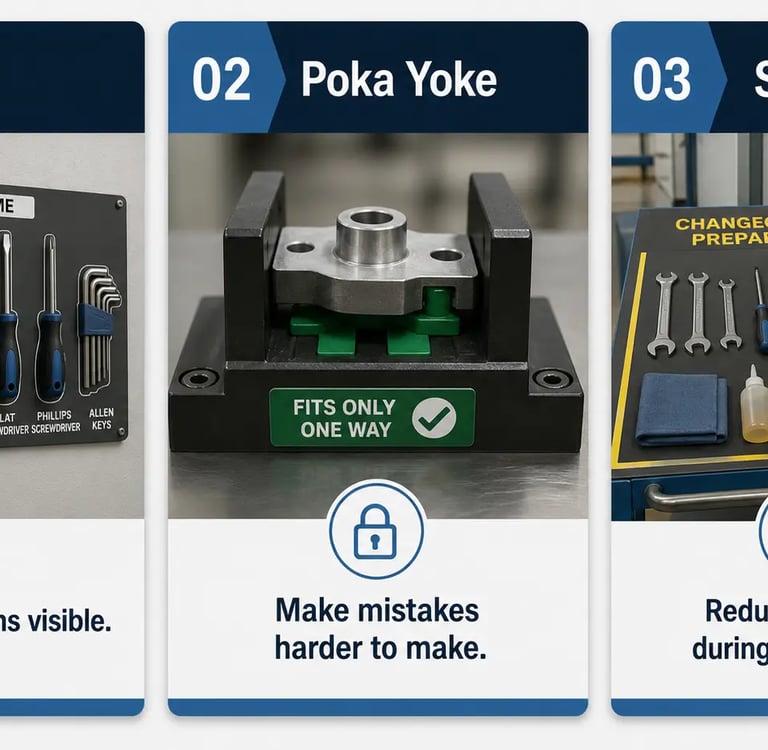
The same applies to Poka Yoke. It is not about blaming people for mistakes. It is about designing the process so that mistakes are less likely. A part can only fit one way. A fixture prevents incorrect placement. A sensor checks that the right component is present. A simple visual signal shows if something is missing.
That is better than telling people to “pay more attention” every time an error happens.
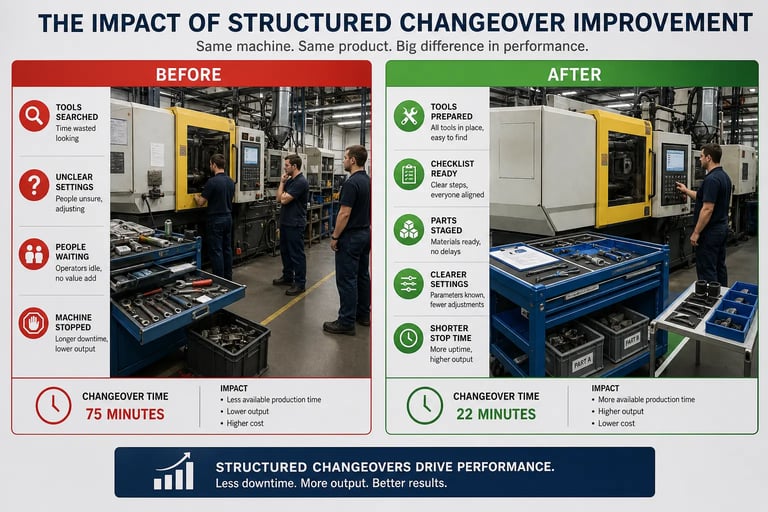
SMED is another useful example. Many companies accept long changeovers because “that is how the machine works.” But when the team studies the changeover closely, they often find wasted time. Tools are not ready. Parts are not prepared. Settings are unclear. Adjustments are repeated. Checks happen after the machine has already stopped. People wait for information.
A structured approach asks:
What can be done before the machine stops?
What must happen while it is stopped?
What can be standardised? What can be prepared?
What can be made clearer?
The result may not require a new machine. It may require a better checklist, pre-staged tools, clearer settings, and a short review after each changeover.
Manufacturing organisations also gain from better communication.
In many factories, operators know the daily problems. Managers know the targets. Quality knows the defects. Maintenance knows the breakdown pattern. Planning knows the customer pressure.
But these groups often talk past each other.
An A3 creates a shared view.
It gives the team one place to show the problem, the evidence, the likely causes, and the action plan. It helps people stop arguing from memory. It also makes follow-up easier, because the plan is visible.
This is especially useful when improvement projects involve change.
A new standard may be technically correct. But people may still resist it.
They may not understand why it is needed. They may feel blamed. They may worry it will create extra work. They may have seen past improvement projects fade away after a few weeks.
That is why stakeholder engagement matters.
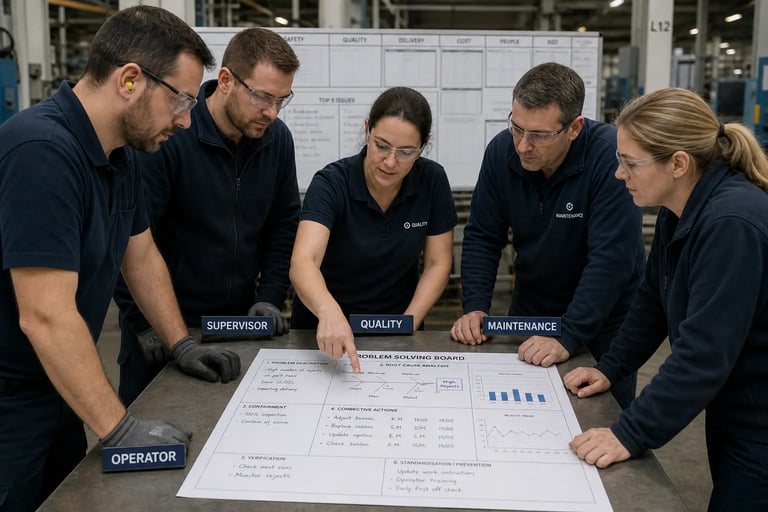
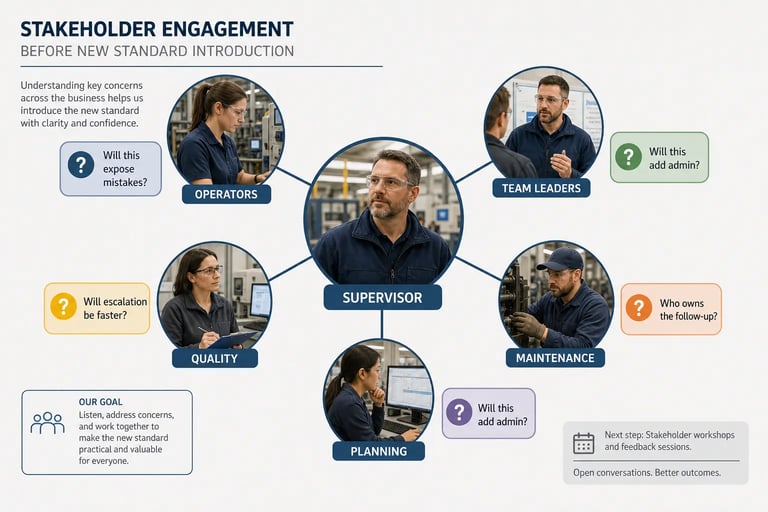
If a supervisor wants to introduce a new quality control board, the tool itself may be simple. The human side is harder. Operators may think the board is there to expose mistakes. Team leaders may worry about more admin. Quality may expect faster escalation. Maintenance may get pulled into more visible issue tracking.
The supervisor needs to ask:
Who is affected?
Who needs to be involved early?
Who may block the change?
Who needs evidence?
Who needs reassurance?
Who needs training?
THE BOTTOM LINE
Good improvement work is not only about tools. It is about people using the tools properly.
That is one of the biggest benefits of this training for manufacturing organisations.
It gives teams a common approach to improvement.
They learn how to define problems clearly, use data instead of assumptions, test changes on a small scale, involve the right people, and verify whether those changes actually deliver results.
The outcome goes beyond fewer defects or faster changeovers. It creates a workforce that can solve problems every day.
And that's where real operational excellence comes from. Most manufacturing challenges are not solved by one breakthrough idea. They are solved by people spotting issues early, asking better questions, and making consistent improvements over time.
If you want to build these capabilities across your organisation, our Structured Problem-Solving & Lean Basics E-Learning course, Lean Six Sigma courses, corporate training programs, and coaching services provide the practical tools, frameworks, and support to help your teams improve performance and sustain results.
ADVANTAGES IN SERVICE & ADMINISTRATION-DRIVEN ORGANISATIONS


Service and administration teams also have waste. It is just harder to see.
There may be no machine breakdown. No scrap bin. No pallets waiting at the end of a line.
But there are:
Email loops.
Missing approvals.
Duplicate data entry.
Repeated customer calls.
Unclear handovers. F
orms sent back because information is missing.
Meetings with no decisions.
Work waiting in someone’s inbox.
That is waste too.
In service and admin work, poor processes often hide behind busy people. Everyone is working. Everyone is answering messages. Everyone is attending meetings. Everyone is trying to keep up.
But the customer still waits.
This is where Lean thinking can help a lot.
THE BOTTOM LINE
For service and administration teams, the main advantage of the course is a shared way to talk about work.
Instead of saying, “This process is a mess,” the team can say:
What is the current state?
What should the target state be?
Where is the gap?
What does the evidence show?
What is the root cause?
Who needs to be involved?
What small change can we test?
How will we know it worked?
That language works in a factory. It also works in an office.
And for customers, it means less waiting, fewer errors, clearer updates, and better service.
If you want to build these capabilities across your organisation, our Structured Problem-Solving & Lean Basics E-Learning course, Lean Six Sigma courses, corporate training programs, and coaching services provide the practical tools, frameworks, and support to help your teams improve performance and sustain results.
Take a customer service team that gets complaints about slow response times. The first answer may be, “We need more staff.”
That may be true. But it may not be the root cause.
A structured approach asks better questions:
How many requests arrive each day?
Which request types take longest?
How many handovers are needed?
What information is missing at the start?
How often does the customer need to contact the team again?
Which approvals are needed?
Which approvals only exist because nobody has reviewed the process for years?
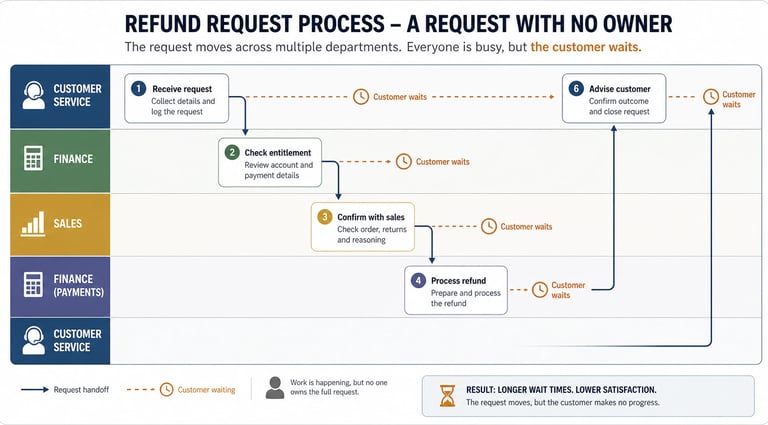
A swim lane diagram can make this clear.
It may show that a simple refund request moves from customer service to finance, then to sales, then back to finance, then back to customer service. Nobody owns the full request. The customer waits. The employees feel busy. The process is the problem.
That distinction is important.
Poor systems can make good people look slow or careless.
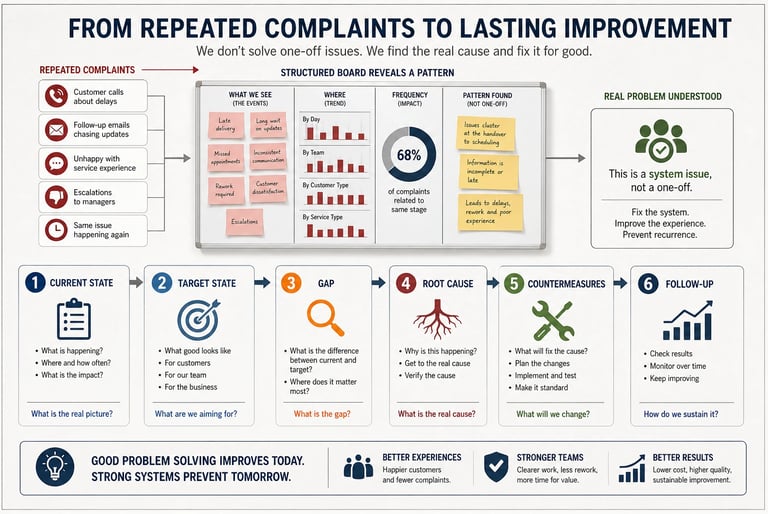
A3 thinking helps service teams stop treating every issue as a one-off complaint.
It helps them look for patterns.
If customers keep calling for updates, the real problem may not be call volume. The real problem may be that the process does not give customers clear updates.
If invoices keep being corrected, the real problem may not be finance staff. It may be unclear master data ownership.
If tickets are reopened again and again, the real problem may be that the issue was not defined properly at the start.
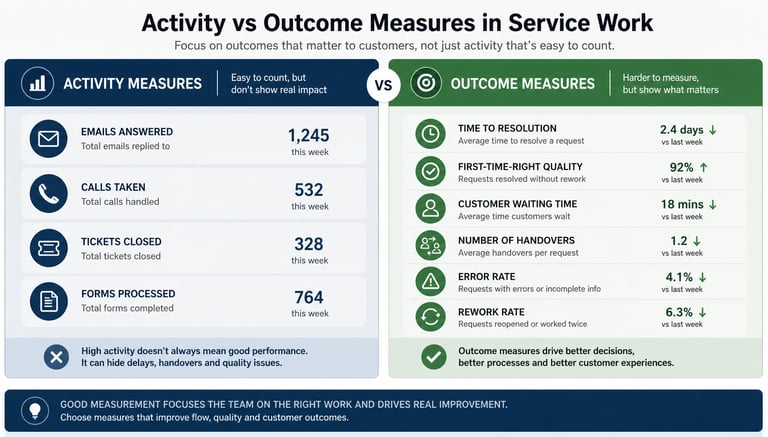
In admin work, measurement also needs care.
Many teams measure activity. Emails answered. Calls taken. Tickets closed. Forms processed. These numbers are easy to count, but they can mislead.
A ticket closed quickly but reopened twice is not a good result.
A call handled in three minutes but followed by two more calls is not efficient.
A form processed on time but with wrong data has only moved the problem somewhere else.
Better measures look at what the customer needs. Time to resolution. First-time-right quality. Waiting time. Number of handovers. Error rate. Rework. Clear ownership.
These measures show whether the process is actually working.
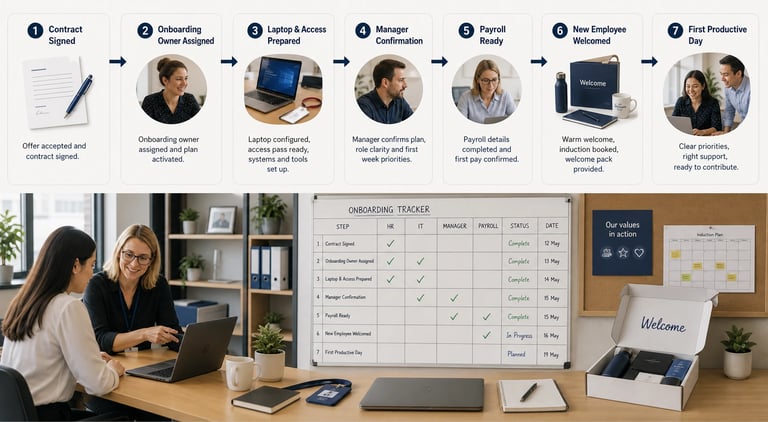
Consider HR onboarding.
A company may receive complaints that new employees feel confused. Laptops arrive late. Access is missing. Managers forget to submit requests. Payroll receives data too late. IT gets blamed for delays caused earlier in the process.
Without structure, HR may create a longer checklist. That may help a little. But it may also become another document nobody uses.
A better approach maps the full process from signed contract to the first productive working day. Who triggers each step? What information is needed? Who owns the task? Where does work wait? Where do mistakes repeat?
The team may test a simple change: one onboarding owner, standard request timing, a visible onboarding tracker, and a confirmation message to the new employee.
That is not complicated. But it can make a real difference.
The new employee feels expected.
The manager knows what to do.
IT gets information earlier.
Payroll avoids corrections.
HR spends less time chasing people.
The customer experience improves because the internal process improves.
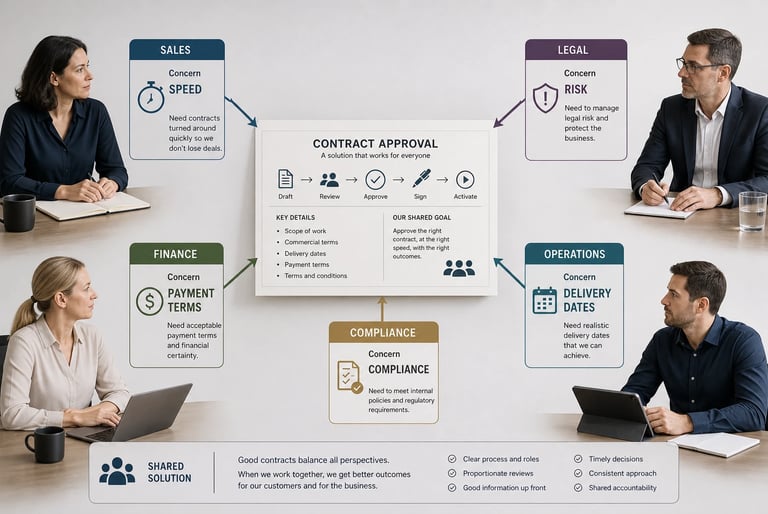
Service and administration work also depends heavily on stakeholder management. Many office processes cross several departments. Sales owns one step. Finance owns another. Operations owns another. Legal owns another. Compliance owns another.
Each team may optimise its own part. The full process may still be slow.
This is why stakeholder thinking matters.
Take contract approval. Sales wants speed. Legal wants risk control. Finance wants payment terms checked. Operations wants realistic delivery dates. The customer wants a clear answer.
If one group designs the new process alone, the solution will probably fail.
A structured approach brings the right people into the discussion. It looks at what each stakeholder needs, what risk they see, and where the process gets stuck.
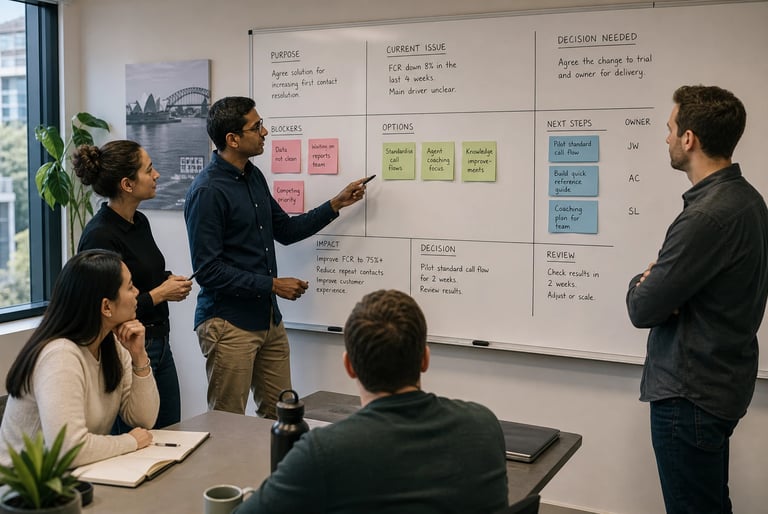
The course’s focus on effective meetings is also useful in service and admin teams.
Many office meetings waste time because nobody is clear about the purpose.
Is the meeting for a decision?
For alignment? For problem-solving?
For sharing information?
A better meeting starts with a simple question: what needs to be decided or solved?
A short daily or weekly meeting can be useful when it reviews real work, current blockers, owners, and next steps. It becomes waste when people read out updates that could have been sent in a short message.
ADVANTAGES IN UNI LIFE


University life has many processes, even if students do not call them that.
Choosing subjects is a process.
Planning assignments is a process.
Working in a group is a process.
Preparing for exams is a process
Writing a thesis is a process.
Getting feedback and improving from it is a process.
THE BOTTOM LINE
For students, the course offers a practical thinking toolkit. It helps with assignments, group work, presentations, planning, feedback, and communication.
It does not replace subject knowledge. A law student still needs law. An engineering student still needs engineering. A business student still needs business knowledge.
But structured problem-solving helps students use their knowledge with less panic and less wasted effort.
That is a real advantage.
If you want to build these capabilities, our Structured Problem-Solving & Lean Basics E-Learning course, Lean Six Sigma courses, corporate training programs, and coaching services provide the practical tools, frameworks, and support to help your teams improve performance and sustain results.
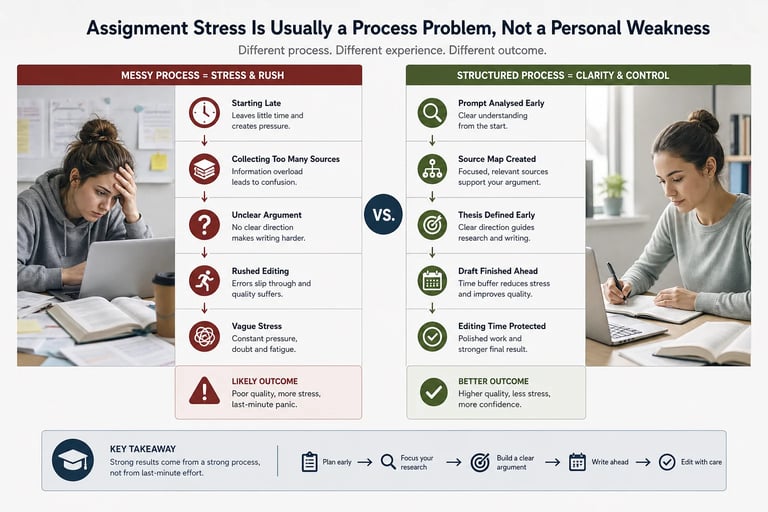
Many students treat academic stress as a personal weakness. They think they are lazy, disorganised, or bad at writing.
Sometimes effort is part of the issue. But often the real problem is the process.
A student may start assignments late because the task is unclear. They may spend too long collecting sources and not enough time writing. They may write without a clear argument. They may wait too long to ask for feedback. They may leave editing until the final night.
Structured problem-solving helps students stop using vague labels and start looking at the real pattern.
For example, a student might define the problem like this:
“I lose marks because I start assignments too late and rush the final argument.”
The current state might be:
I read the prompt late.
I collect too many sources.
I do not define the thesis early.
I write the introduction before I know the argument.
I edit in a rush.
The target state might be:
I analyse the prompt within two days.
I create a source map by day five.
I draft a thesis before writing full sections.
I finish a rough draft one week before submission.
I leave two days for editing.
Now the gap is visible.
The student is not trying to “be better” in general. They are changing a process.
This is one of the most useful lessons from Lean thinking. A vague problem leads to vague action. A clear problem leads to better action.
Group assignments are another strong example.
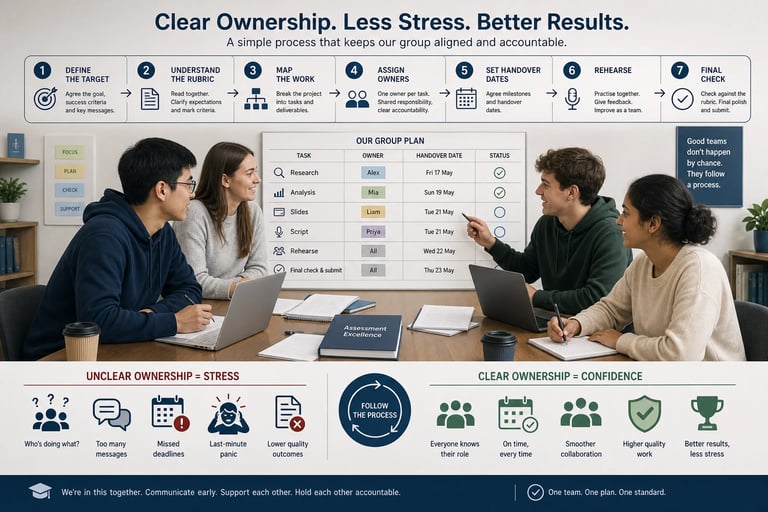
Four students agree to “work on the presentation.” That sounds fine at first. But nobody defines the scope. Nobody owns the structure. Nobody sets handover dates. One person starts making slides before the argument is clear. Another collects sources but does not explain them. Another waits because they do not know what to do. The final week becomes stressful.
A structured approach would look different.
The group first defines the target.
What does a good submission need to do?
What does the rubric ask for?
What evidence is needed?
What does the presentation need to prove?
Then the group maps the work. Research. Argument. Slide structure. Speaker notes. Referencing. Rehearsal. Final check.
Then the group assigns owners and dates.
This is not about making uni feel like a workplace. It is about respecting shared work.
It also reduces conflict. Many group problems happen because expectations were never made clear. People do not always fail because they do not care. They fail because the work was badly organised.
The human skills in the course also fit uni life well.
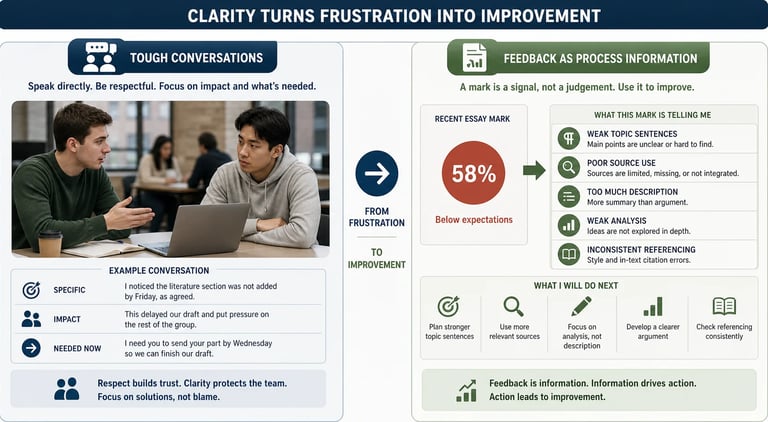
Tough conversations are common in group work. A student may need to tell a group member that missed deadlines are affecting the whole team. Many students avoid this until they are angry.
A better message is clear and specific:
“We agreed to upload the analysis by Wednesday. It is now Friday, and the slide team cannot finish without it. What is blocking you, and what can you send today?”
That is not rude. It is honest.
Feedback is another area where students can use structured thinking. Grades can feel personal. A low mark can feel like proof that the student is not good enough.
But feedback is more useful when it is treated as process information.
Maybe the topic sentences were weak.
Maybe the sources were not used well.
Maybe the essay described too much and analysed too little.
Maybe the argument did not answer the question.
Maybe the referencing was inconsistent.
Once the issue is named, it can be improved.
ADVANTAGES IN PRIVATE LIFE
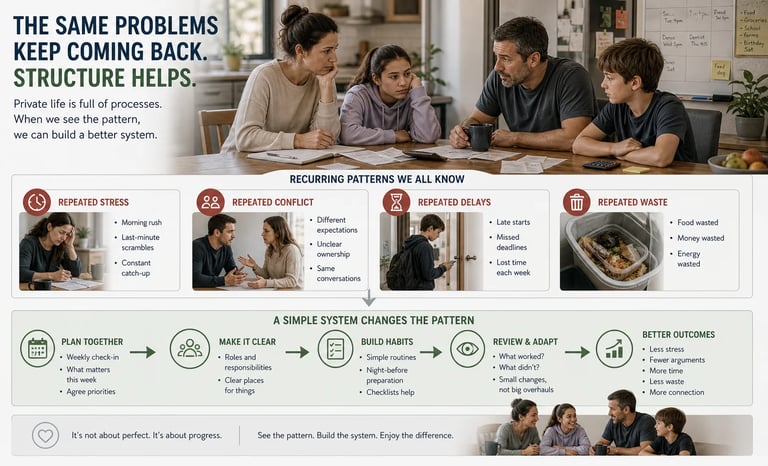
Private life has processes too.
Morning routines. Grocery shopping. Budgeting. Meal planning. Family calendars. School preparation. Home repairs. Travel planning. Health appointments. Moving house. Caring for relatives.
Most people do not call these processes. But they are.
And when they do not work, life feels harder than it needs to.
The problem is that private life issues often feel personal. If the kitchen is always messy, someone gets blamed. If bills are paid late, someone is called careless. If the family is late every morning, people argue about who should have prepared better.
Sometimes personal responsibility matters. But often the process is unclear, overloaded, or poorly designed.
THE BOTTOM LINE
The private-life value of Lean thinking is easy to underestimate. But once people learn structured problem-solving, they start noticing patterns everywhere.
Repeated stress often has a process behind it.
Repeated conflict often has unclear expectations behind it.
Repeated delays often have missing preparation behind them.
Repeated waste often has no owner or no standard behind it.
Not every part of life should be measured or controlled. Some things should stay flexible, emotional, creative, and unplanned.
But when the same problem keeps returning, structure helps.
If you want to build these capabilities, our Structured Problem-Solving & Lean Basics E-Learning course, Lean Six Sigma courses, corporate training programs, and coaching services provide the practical tools, frameworks, and support to help your teams improve performance and sustain results.
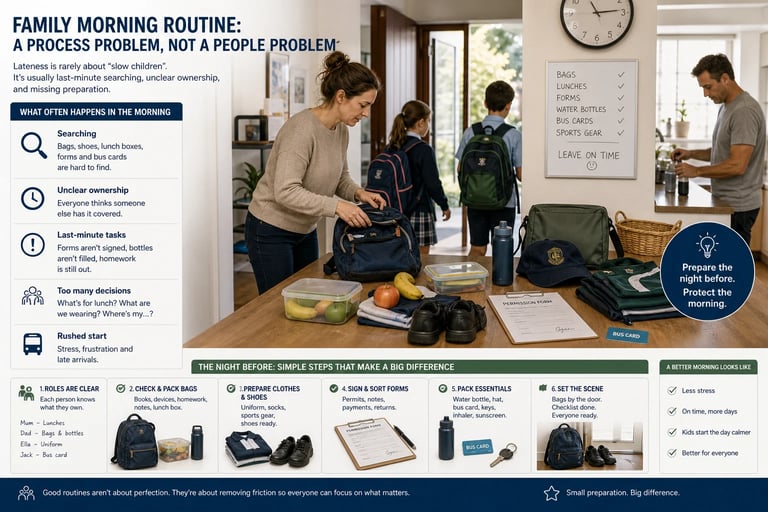
Take the morning routine.
A family leaves late three times a week. The usual conversation becomes emotional. One person says the children are too slow. Another says nobody packed the bags. Someone else says breakfast takes too long.
A structured approach looks at the steps.
What needs to happen before leaving?
Which tasks can happen the night before?
Where do people wait?
What items are searched for?
What information is missing?
Who owns each task?
The family may find that the real issue is not “slow children.” The real issue is that shoes, lunch boxes, sports clothes, signed forms, and bus cards are all checked in the last ten minutes.
The solution may be simple. Bags packed before dinner. Shoes near the door. Forms in one visible place. Lunch containers ready. A clear leaving time.
That is Lean at home. No jargon needed.
5S also works at home.
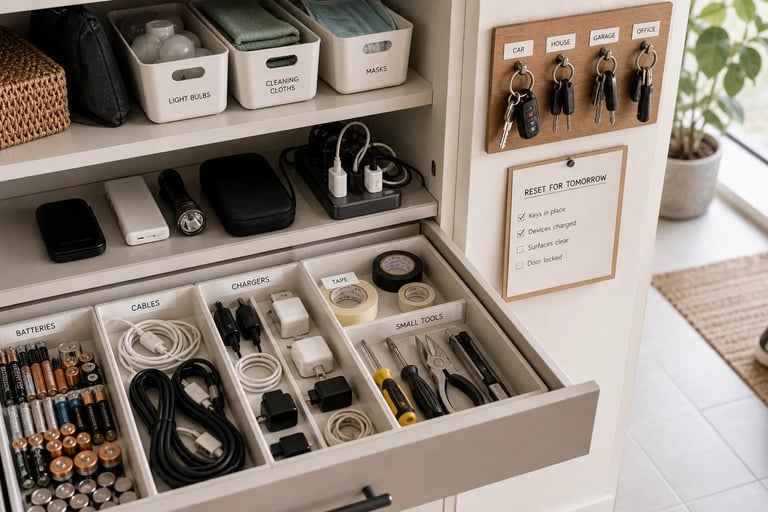
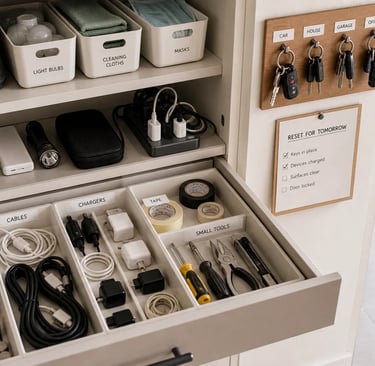
Think about the drawer full of batteries, keys, cables, tape, chargers, and random screws. The drawer is not a personal failure. It is an unorganised storage system.
Sort what is needed. Remove what is not. Give useful items a clear place. Make it easy to see when something is missing. Keep the system simple enough to maintain.
The point is not to create a perfect home. The point is to remove small daily frustrations.
Change management matters at home too.
People resist change when they feel controlled, judged, or ignored. That is true at work. It is also true in a household.
If one person suddenly announces a new system, others may push back. Not because the idea is bad, but because the change feels forced.
Therefore, stakeholder engagement is essential. At home, it simply means involving the people affected before the decision is finished.
For example, a household wants to reduce food waste. One person suggests meal planning. Another hates rigid plans. A child refuses leftovers. Someone shops without checking the fridge.
Instead of forcing one system, the household can treat it as a small improvement project.
What food gets wasted?
Why does it get wasted?
Are portions too large?
Are ingredients forgotten?
Do plans change during the week?
Is shopping done without checking what is already there?
The first test could be small. One “use what we have” dinner each week. A visible leftovers shelf. A shopping list made only after checking the fridge.
Small changes are easier to keep.

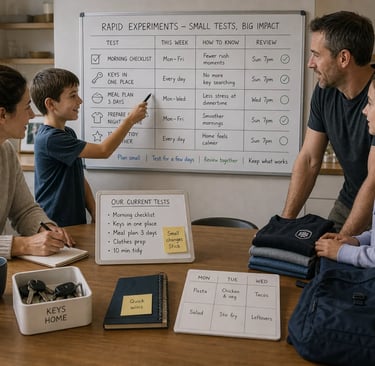
Private life also benefits from rapid experiments.
People often make personal improvement too big. A new budget. A new diet. A new routine. A new study plan. A new family rule.
Then normal life interrupts, and the plan fails.
A Lean approach starts smaller.
Try the new morning checklist for one week.
Try putting keys in one place for ten days.
Try planning meals for three weekdays, not seven.
Try preparing clothes the night before only on school days.
Then check what happened.
Keep what worked. Change what did not.
This is a kinder way to improve. If the experiment fails, the person is not the failure. Maybe the plan was too complex. Maybe the timing was wrong. Maybe the trigger was unclear. Maybe the benefit was not obvious enough.


Bock & Kohl TRANSFORM2BEST GbR
Nordring 6
47918 Tönisvorst
Germany
REPRESENTED BY:
Thorsten Bock
Tobias Kohl
NOTICE ACCORDING TO § 19 UStG:
As a small business within the meaning of Section 19 of the German Value Added Tax Act, no VAT is charged and therefore none is shown.
CONTACT
Phone: +49 (0) 172 136 057 9
E-Mail: transform2best.coaching@gmail.com
© 2026 Bock & Kohl TRANSFORM2BEST GbR – All rights reserved.